












Berlin Snapshot: Art and Culture

Berlin’s cultural landscape is always in motion—layered, unpredictable, and endlessly expansive. With this in mind, we’ve put together a personal selection of worthwhile cultural events and art exhibitions.
Should you wish for further context or tailored recommendations, we’re here for you.
Adrian Ghenie - Cloud Fever
15 November 2025 & 18 January 2026

“For me, the twentieth century was a century of humiliation – through my painting, I’m still trying to understand this,” Adrian Ghenie famously stated – only to assert that “I’m not a history painter.” Ghenie, born (*1977) and raised in Romania during the Ceausescu dictatorship, is arguably the most successful and influential figurative painter of his generation – the first generation, one might add, to grow up in the age of the Internet. Along with the tumultuous history of the twentieth century, its art has been a great stimulus for Ghenie. It comes as no surprise that he approaches the achievements of the historical avant-garde, Duchamp and his successors, with great ambiguity. Some of his best-known early paintings carry titles such as Duchamp’s Funeral and Dada is Dead, reflecting Ghenie’s creed that the now canonized avant-gardists established an “extremist attitude in art, an ideological hatred of painting”. Ghenie’s imperturbable response to the rampant iconographical and technical “anything goes” of post-modernism, is his focus on the traditional, not to say reactionary medium of painting. What distinguishes him from other figurative painters of his peer group is his profound understanding of art history, that never exhausts itself in citation, and an increasingly virtuoso play with different stages of recognizability. Ever since his international debut in 2006 with his now legendary Pie Fight series, Ghenie has garnered attention and excitement with his intriguing compositions and stupendous technique, achieving the rare thing: to burn a highly individual and idiosyncratic style into our visual memory. Lenin, Darwin, van Gogh, Rousseau – and time and again himself: despite his anachronistic practice, Adrian Ghenie’s way of painting our common history has already earned him his own place in art history. His paintings can be found in the permanent collections of museums such as the Metropolitan in New York, Tate in London, the Centre Pompidou in Paris and the Hermitage in St. Petersburg. Galerie Judin has been working with the artist since the year 2006. Juerg Judin is the editor of three successive monographs published by Hatje Cantz in 2009, 2014 and 2020.
Hildur Guðnadóttir presents Where to From
1 November 2025 & 2 March 2026
A special evening of music commissioned by the Barbican, Volksbühne am Rosa-Luxemburg-Platz Berlin and a consortium of partner venues and festivals, featuring Hildur Guðnadóttir on vocals and Cello, presenting her new album Where to From, with Constance Ricard (cello), Liam Byrne (viola da gamba), Peyee Chen (soprano), Nina Guo (soprano), Sarah Saviet (viola), Francesco Donadello (sound engineer) and Theresa Baumgarner (lighting design).

Academy Award winning Hildur Guðnadóttir is an Icelandic composer, cellist, and singer who has been manifesting herself at the forefront of experimental pop and contemporary music. In her solo works she draws out a broad spectrum of sounds from her instrument, ranging from intimate simplicity to huge soundscapes. Her work for Film and Television includes Sicario: Day of the Soldado, Mary Magdalene, Tom of Finland, Journey’s End and 20 episodes of the Icelandic TV series Trapped. In addition, her body of work includes scores for films such as Joker, for which she won an Academy Award and a Golden Globe award for Best Original Score. As well as the critically acclaimed HBO series Chernobyl, for which she received a Primetime EMMY award and a GRAMMY Award for Best Score Soundtrack for Visual Media.
Berlinische Galerie - Raoul Hausmann - Vision. Provokation. Dada.
8 November 2025 - 16 March 2026
Raoul Hausmann was one of the most innovative avant-garde artists of the modernist era. Art and life, in his view, were inextricably connected. His desire to discard familiar forms and constantly enact “tomorrow” made him a trailblazer in multi-media art. As a Dadaist he was among those who invented collage, but he also devised synaesthetic apparatus, penned experimental texts, gave performances that explored the relationship between body, sound and space, and merged the visual with the haptic in his photography. Throughout his life, not only in his art but also in his quest for new ways to live and to think the world, he was eager to break free of convention and swim against the bourgeois tide.

© VG Bild-Kunst, Bonn 2024
The big retrospective at the Berlinische Galerie, featuring some 200 works from collections in Germany and abroad, will showcase this multi-facetted and pioneering creativity which so influenced subsequent generations of artists and place it in the context of current discourse.
Hausmann’s late œuvre, produced after he left Nazi Germany for France, will feature prominently thanks to generous input from the Musée d’art contemporain de la Haute-Vienne ‒ Château de Rochechouart. This continues the acclaimed series of collaborative ventures between the Berlinische Galerie and other European museums.
Gemäldegalerie - Paintings from the 13th to 18th Century
Permanent exhibition
The Gemäldegalerie holds one of the world’s most remarkable collections of European painting from the 13th to the 18th century. Masterworks by van Eyck, Dürer, Raphael, Caravaggio, Rembrandt, Vermeer and others are displayed across 72 luminous rooms at the Kulturforum.

The collection invites you to trace the arc of Western art—from late medieval altarpieces to the luminous stillness of the Dutch Golden Age. Highlights include Italian Renaissance icons, German Gothic panels, and one of the largest ensembles of Rembrandt paintings in existence, anchored in an octagonal room at the museum’s heart.
Quiet, spacious, and beautifully arranged, this is a place to get lost in.
Feuerle Collection
Permanent exhibition

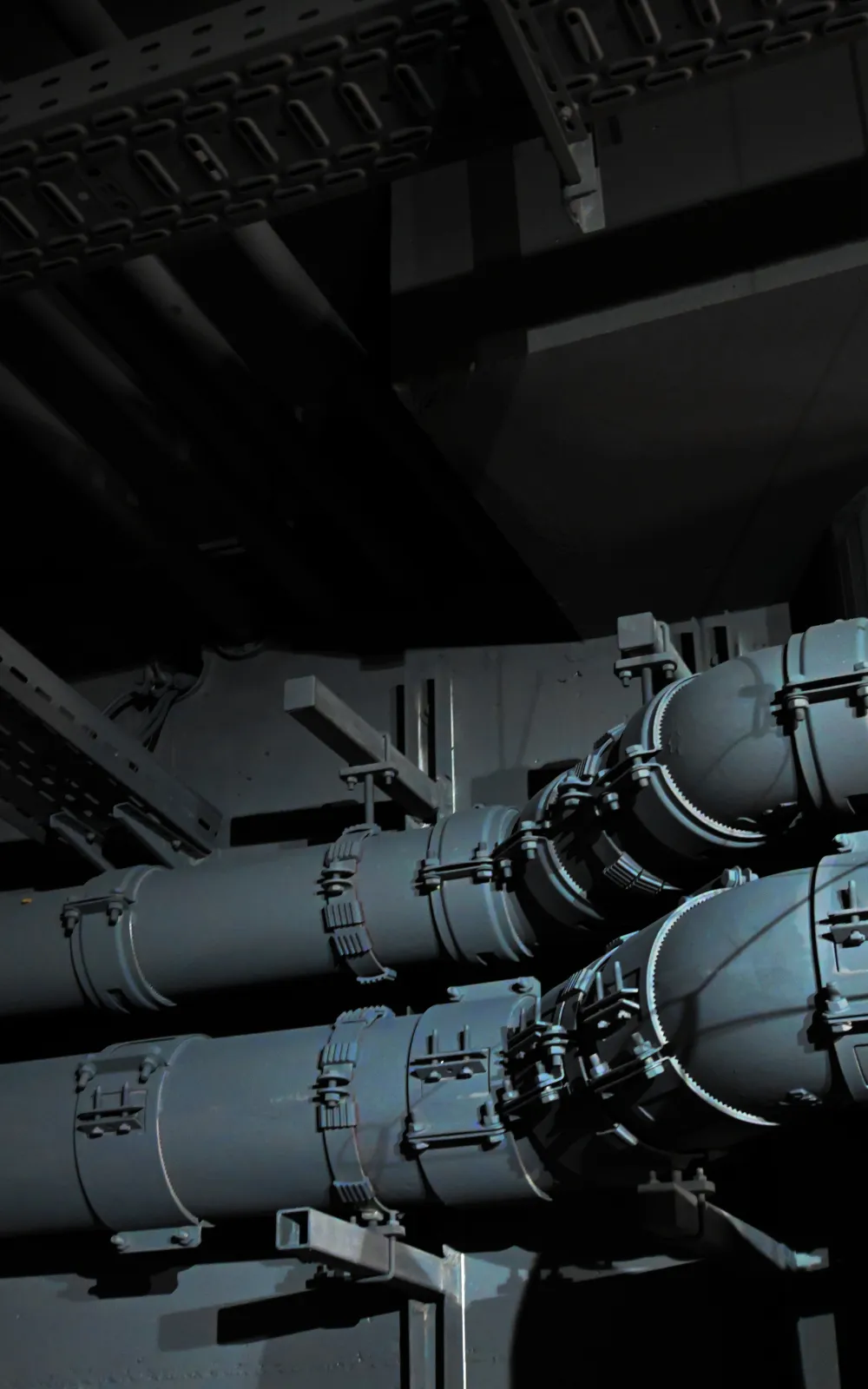
Inside a renovated World War II telecommunications bunker, The Feuerle Collection offers a rare and reverent encounter: Chinese Imperial furniture, early Khmer sculptures, and works by artists like Anish Kapoor and Zeng Fanzhi are presented side by side in near-darkness.
Designed by architect John Pawson, the space unfolds slowly—cool, meditative, almost subterranean in feel. Light reveals details gradually; sound and scent play active roles. The effect is both intimate and monumental.
Highlights include the world’s first presentation of Chinese Incense Culture as a live, performative art form, held in a dedicated Incense Room, alongside a Sound Room and a submerged Lake Room.
Boros Collection
Permanent exhibition
Link to exhbition & to book a visit

Since 2008, the Boros Collection has presented rotating exhibitions of international contemporary art within a five-story World War II bunker in central Berlin. Transformed by architect Jens Casper into a network of contrasting rooms—some sleek and minimal, others bearing raw traces of the building’s past—the space itself shapes the experience as much as the work on display.
The collection spans painting, sculpture, installation, and photography from 1990 to today. Many pieces are site-specific, engaging directly with the bunker’s layered history as wartime shelter, prison, storage space, and legendary techno club.
Access is by guided tour only, Thursday through Sunday. Booking well in advance is advised.